craftsman radial arm saw user manual

Craftsman radial arm saws, detailed in numerous downloadable PDF manuals (like 103.29310), offer versatile cutting. These saws, alongside related Craftsman building guides, empower users with precision and power.
Historical Context of Craftsman Saws
Craftsman tools, including radial arm saws, gained prominence through Sears and Roebuck catalogs, beginning in the early 20th century – evidenced by manuals dating back to 1905. These saws became staples in home workshops, offering accessible quality. Early Craftsman manuals, often PDF format now, demonstrate a commitment to DIY enthusiasts, evolving alongside woodworking techniques and user needs over decades.
Overview of Radial Arm Saw Functionality
Craftsman radial arm saws utilize a circular blade sliding along a radial arm, enabling precise crosscuts, miters, and bevels. User manuals, like those for model 103.29310, detail adjusting the arm and carriage for varied cuts. These saws excel at handling large sheet goods, offering power and versatility for woodworking projects.

Safety Precautions
Craftsman radial arm saw manuals emphasize crucial safety rules. Always wear PPE, understand specific hazards, and follow instructions to prevent injuries during operation.
General Safety Rules
Craftsman manuals consistently stress disconnecting power before adjustments or blade changes. Maintain a clean workspace, free of obstructions, and ensure adequate lighting. Always use push sticks when handling smaller pieces. Never reach over the blade, and be mindful of the saw’s swing radius. Inspect the saw before each use for damage or loose parts, prioritizing a safe operating environment.
Specific Hazards of Radial Arm Saws
Craftsman radial arm saws present kickback risks if material binds during cutting. Blade contact is a severe hazard; guards must be functional. Dust inhalation requires respiratory protection. Improper setup leads to inaccurate cuts and potential injury. Always secure workpieces firmly, and never bypass safety mechanisms detailed in the user manual.
Personal Protective Equipment (PPE)
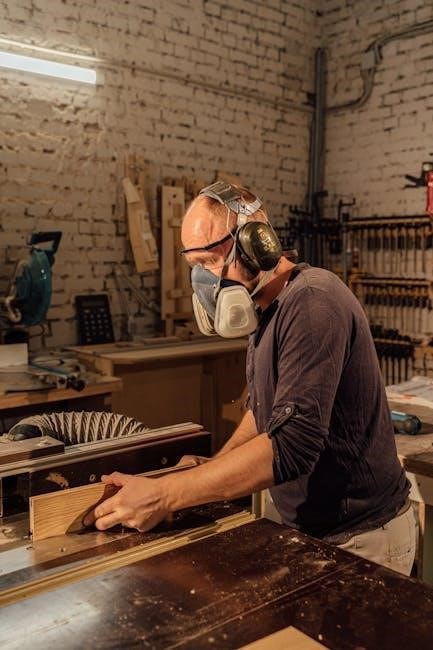
When operating a Craftsman radial arm saw, always wear safety glasses to protect against flying debris. Hearing protection is crucial due to the saw’s loud operation. A dust mask or respirator prevents inhalation of wood dust. Sturdy footwear and close-fitting clothing minimize injury risks, as outlined in the manual.
Components and Parts Identification
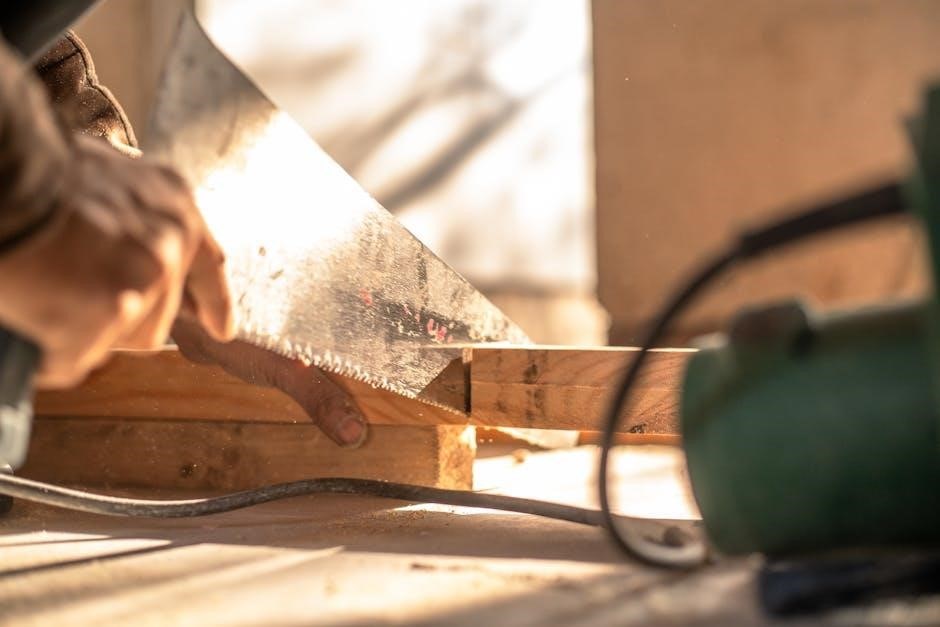
Craftsman radial arm saw manuals detail the saw frame, radial arm, carriage, blade, and guard – essential components for safe and effective operation and maintenance.
Saw Frame and Base
Craftsman radial arm saw manuals illustrate the robust saw frame, typically constructed from heavy-duty steel, providing stability during operation. The base supports the entire assembly, often featuring mounting points for secure floor attachment. Understanding the frame’s construction, as detailed in guides like those for model 103.29310, is crucial for assessing structural integrity and performing necessary repairs or maintenance, ensuring safe and accurate cuts.
Radial Arm and Carriage
Craftsman radial arm saw manuals emphasize the importance of the radial arm’s smooth movement along its track. The carriage, sliding along the arm, holds the blade and allows for adjustments in cutting depth and angle. Proper lubrication, detailed in available PDF guides, ensures effortless operation. Inspecting these components, like those in model 103.29310, is vital for precision.
Blade and Guard
Craftsman radial arm saw manuals consistently highlight blade safety and proper guarding. Regularly check the blade for sharpness and damage, referencing PDF guides for correct replacement procedures. The guard must function flawlessly, protecting the operator from accidental contact. Models like 103;29310 require specific blade types; consult documentation for compatibility.

Assembly and Setup
Craftsman saw setup, detailed in available PDF manuals, begins with unpacking and inspection. Secure mounting is crucial, followed by precise blade installation and tensioning for optimal performance.
Unpacking and Initial Inspection
Upon receiving your Craftsman radial arm saw, carefully unpack all components, referencing the parts list in your PDF manual. Inspect for any shipping damage – check the frame, arm, carriage, and blade guard. Verify all hardware is present. Note any discrepancies immediately and contact Sears/Craftsman support. Ensure the blade is securely packaged and hasn’t been compromised during transit. A thorough initial inspection prevents issues later.
Mounting the Saw
Securely mount your Craftsman radial arm saw on a stable, level surface capable of supporting its weight, as detailed in the user manual. Bolting the saw to the floor or a sturdy workbench is recommended. Ensure adequate clearance around the saw for safe operation and material handling. Proper mounting minimizes vibration and maximizes cutting accuracy.
Blade Installation and Tensioning
Refer to your Craftsman radial arm saw manual for correct blade installation procedures. Ensure the blade is securely clamped and properly tensioned to prevent wobbling or kickback during operation. Verify the blade guard functions correctly after installation. Regularly check blade tension and retighten as needed for optimal performance.
Operating Instructions
Craftsman radial arm saw operation, detailed in available manuals, involves precise adjustments for miter, bevel, and dado cuts, ensuring safe and accurate workpiece processing.
Basic Cutting Techniques
Craftsman radial arm saw manuals emphasize secure workpiece clamping against the fence for straight cuts. Always maintain a firm grip and feed the blade smoothly, avoiding forcing it. Proper stance and hand positioning are crucial for control, as detailed in downloadable PDF guides. Remember to utilize the blade guard consistently during all cutting operations, prioritizing safety as outlined in the documentation.
Miter and Bevel Cuts
Craftsman radial arm saw manuals illustrate precise miter adjustments using the saw’s protractor and locking mechanisms. Bevel cuts require tilting the saw head, ensuring secure locking before initiating the cut. Refer to PDF guides (like those for model 103.29310) for detailed angle settings and proper technique. Always double-check adjustments before each cut for accuracy.
Dado Cuts
Craftsman radial arm saw manuals detail dado cuts utilizing a dado blade set, requiring careful adjustment of blade width. Multiple passes are often needed for wider dados, ensuring stability and controlled depth with each pass. PDF resources, including those for model 103.29310, emphasize safety and proper blade guarding during this operation.
Maintenance and Troubleshooting
Craftsman saw manuals highlight lubrication, blade changes, and sharpening as key maintenance tasks. PDF guides, like those for model 103.29310, address common issues and solutions.
Lubrication
Craftsman radial arm saw manuals emphasize regular lubrication for smooth operation and longevity. Key areas needing attention include the radial arm bearings, carriage rails, and elevation mechanism. Use a high-quality machine oil, applying it sparingly to avoid attracting dust. Consult your specific model’s PDF manual (e.g., 103.29310) for detailed diagrams and recommended lubrication points, ensuring optimal performance and preventing wear.
Blade Changes and Sharpening
Craftsman radial arm saw manuals detail safe blade changes, requiring disconnection from power. Proper blade tension is crucial, as outlined in PDF guides like those for model 103.29310. Sharpening or replacing dull blades ensures clean cuts and reduces strain. Always use the correct blade type for the material being cut, following manual instructions.
Common Problems and Solutions
Craftsman radial arm saw manuals address issues like blade drift or motor stalling. Referencing PDF guides (e.g., 103.29310) helps diagnose problems. Solutions include adjusting blade tension, lubricating moving parts, or checking electrical connections. Always disconnect power before troubleshooting, prioritizing safety as detailed in the documentation.

Understanding Model Numbers (e.g., 103.29310)
Craftsman model numbers, such as 103.29310, are crucial for identifying parts and accessing the correct PDF manuals for your radial arm saw.
Decoding Craftsman Model Numbers
Craftsman model numbers, like 103.29310 found in available PDF manuals, aren’t simply random sequences. They contain coded information about the saw’s features and manufacturing date. Understanding this structure aids in pinpointing specific parts needed for repair or maintenance. These numbers unlock access to detailed diagrams and instructions, ensuring accurate restoration and continued safe operation of your radial arm saw.
Finding Parts Based on Model Number
Once you’ve decoded your Craftsman radial arm saw’s model number – such as 103.29310 – locating replacement parts becomes significantly easier. Utilize this number when searching online retailers or contacting Craftsman/Sears support. Accessing PDF manuals often reveals exploded diagrams, clearly identifying part numbers for precise ordering, ensuring compatibility and a successful repair.
Accessing Manuals and Documentation
Craftsman radial arm saw manuals, including those for model 103.29310, are readily available online as PDF downloads, offering comprehensive guidance and support.
Online Resources for Craftsman Manuals
Numerous websites archive Craftsman radial arm saw manuals in PDF format, including resources for the popular 103.29310 model. Searching online reveals historical Craftsman catalogs from 1905 and later, alongside Sears and Roebuck table saw manuals. Dedicated forums and repair sites often host scanned copies, providing valuable documentation for owners seeking guidance and troubleshooting assistance.
Sears/Craftsman Archive Information
While a dedicated, centralized Sears/Craftsman archive is fragmented, historical catalogs (like those from 1905) offer glimpses into past models. Information regarding manuals, including those for radial arm saws such as the 103.29310, is often dispersed across online forums and vintage tool communities. Locating specific documentation requires diligent searching and cross-referencing.

Advanced Techniques
Craftsman radial arm saws, beyond basic cuts, can tackle curves and utilize specialty blades – skills detailed in supplemental guides and user experiences online.
Cutting Curves with a Radial Arm Saw
Craftsman radial arm saws aren’t inherently designed for curves, but skilled users can achieve them. This involves a combination of slow, deliberate feed rates and potentially utilizing a narrower blade. Careful control of the radial arm’s movement, combined with practice, allows for surprisingly smooth arcs. Remember to prioritize safety and avoid forcing the cut, as this can lead to kickback or blade damage. Online resources and experienced users often share techniques for refining this advanced skill.
Using Specialty Blades
Craftsman radial arm saws accommodate various blades beyond the standard wood-cutting variety. Specialty blades, like those for metal or plastics, expand the saw’s capabilities. However, always verify the blade’s compatibility with your specific Craftsman model and reduce the RPM accordingly. Proper blade installation and guarding are crucial when utilizing non-standard blades to ensure safe operation and prevent damage.
Electrical Considerations
Craftsman radial arm saws require appropriate voltage and amperage. Consult your manual for fuse/breaker information to prevent electrical hazards during operation and maintenance.
Voltage and Amperage Requirements
Craftsman radial arm saws typically operate on standard 120-volt household current, though some heavier-duty models might require 240 volts. Always verify the specific voltage listed on the saw’s nameplate and in the user manual. Amperage draw varies significantly by model, ranging from 13 to 15 amps, impacting circuit requirements. Using an incorrect voltage or overloading a circuit can cause damage or pose a fire hazard.
Fuse/Breaker Information
Craftsman radial arm saws demand dedicated circuit protection. Consult your saw’s manual for the precise fuse or breaker size needed – typically 15 or 20 amps for 120V models. Never substitute a higher amperage fuse, as this defeats safety features. Regularly check fuse/breaker condition to ensure proper operation and prevent electrical hazards during operation.
Repair and Replacement Parts
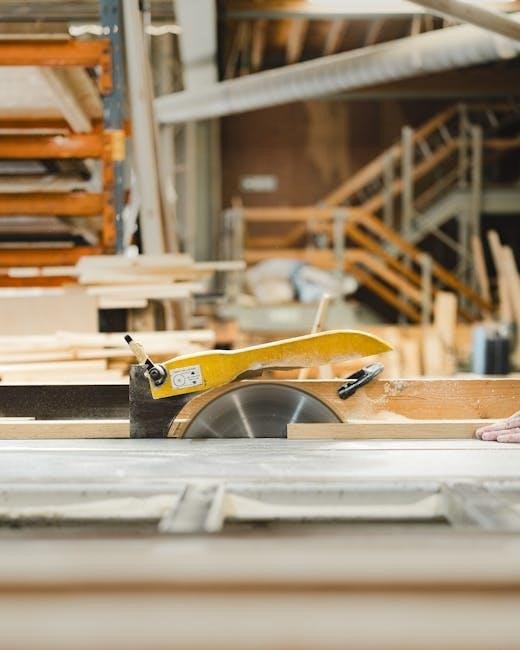
Craftsman radial arm saw repair often requires sourcing specific parts, identified via the model number (e.g., 103.29310). Wear and tear necessitates timely replacements for safe operation.
Identifying Wear and Tear
Craftsman radial arm saw longevity depends on recognizing component degradation. Regularly inspect the blade for dullness or damage, checking for runout. Examine the radial arm and carriage for smooth movement, noting any looseness or binding. Inspect the blade guard for proper function and secure mounting. Worn brushes in the motor, or frayed power cords, also indicate necessary attention and potential replacement to maintain safe operation.
Sourcing Replacement Parts
Finding Craftsman radial arm saw parts requires knowing your model number (e.g., 103.29310). Online resources and Sears/Craftsman archives are valuable. Third-party parts suppliers often stock blades, brushes, and hardware. Carefully verify compatibility before ordering, referencing your saw’s manual for precise specifications to ensure a proper fit and function.

Disposal and Recycling
Craftsman saw disposal requires following local regulations. Metal components are often recyclable; check with local facilities for proper handling and environmental responsibility.
Proper Disposal Methods
Craftsman radial arm saw disposal must adhere to local environmental guidelines. Do not simply abandon the saw. Contact your municipal waste management for e-waste programs or designated drop-off locations. Some areas prohibit landfill disposal of appliances containing certain materials. Consider dismantling for component recycling, separating metal parts from non-recyclable elements, ensuring responsible handling.
Recycling Options for Metal Components
Craftsman radial arm saws contain significant recyclable metal – cast iron, steel, and aluminum. Scrap metal yards readily accept these components, offering potential value for the salvaged materials. Disassemble the saw, carefully separating metal parts. Local recycling centers may also accept smaller metal pieces. Proper recycling conserves resources and minimizes environmental impact.

Resources and Further Information
Numerous online resources host Craftsman radial arm saw manuals in PDF format, including archives of older Sears catalogs. Websites dedicated to woodworking and tool repair often feature discussions and guides. Exploring forums and communities can provide valuable insights from experienced users regarding maintenance and troubleshooting.



Leave a Reply
You must be logged in to post a comment.