self guided colosseum tour

Planning Your Self-Guided Colosseum Tour
Planning a self-guided visit requires pre-booked tickets, utilizing the MyColosseum app, and understanding time limits – 75 minutes with certain tickets.
Consider a PArCo membership for unlimited access, and downloadable guides to enhance your exploration of this historical landmark.
Understanding Colosseum Tickets & Access
Securing entry to the Colosseum now overwhelmingly relies on pre-purchased tickets; on-site availability is virtually nonexistent. Several options cater to different preferences, including standard entry, arena floor access, and tours of the underground levels (Hypogeum).
Skip-the-line tickets are highly recommended to bypass potentially lengthy queues, maximizing your valuable time. Remember that the permanence period within the Colosseum is capped at 75 minutes for specific ticket types, as outlined in visitor regulations.
Exploring the first tier, arena floor, and Hypogeum often requires a guided tour, lasting approximately 60 minutes. Consider the integrated tickets offering access to the Roman Forum and Palatine Hill alongside the Colosseum for a comprehensive experience.
Skip-the-Line Ticket Options
Prioritizing skip-the-line tickets is crucial for a smooth, efficient self-guided Colosseum tour, avoiding potentially significant wait times. These tickets grant expedited entry, allowing you to immediately begin exploring the monument’s wonders. Various providers offer these options, often bundled with access to the Roman Forum and Palatine Hill.
Consider tickets specifically including access to the arena floor and underground levels (Hypogeum) for a more immersive experience. Remember to check the permitted time inside – 75 minutes for certain ticket types – and plan your route accordingly.
Utilize the official MyColosseum app to easily purchase tickets and explore available routes, enhancing your self-guided adventure.
The MyColosseum App: Your Digital Companion
The official MyColosseum app is an invaluable, completely free tool for anyone embarking on a self-guided tour. It streamlines your visit by providing easy access to ticket purchases, eliminating the need for on-site queuing – as on-site tickets are no longer available.
Beyond ticketing, the app unlocks a wealth of information, allowing you to explore suggested routes and delve into the Colosseum’s rich history through captivating stories. It functions as a digital guide, enhancing your understanding and appreciation of the monument.
Download the app before your visit to maximize its benefits and ensure a seamless, informative experience.
Colosseum Visit Duration & Time Limits
Understanding time constraints is crucial for a successful self-guided Colosseum tour. The Visitors Regulation dictates a permanence period of 75 minutes for visitors with specific ticket types, impacting how much you can explore.
Guided tours, like “A Night at the Colosseum,” typically last around 60 minutes, focusing on the first tier, arena floor, and underground levels. However, for independent exploration, efficient planning is key.
Arrive prepared to make the most of your allotted time, prioritizing areas of interest and utilizing resources like downloadable guides to navigate effectively within the time limit.
Navigating the Colosseum Levels
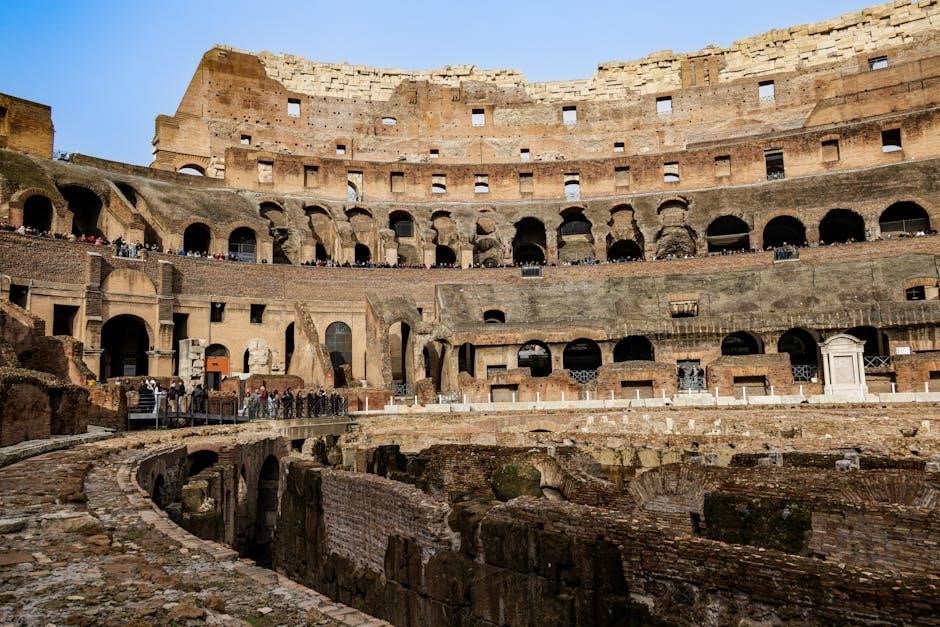
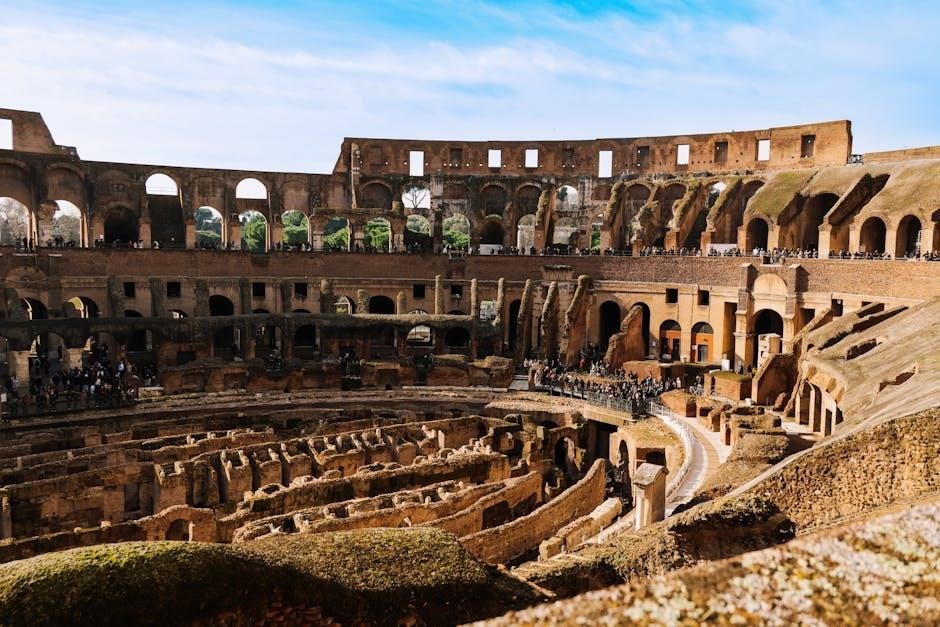
Explore the Colosseum’s tiers, from the first level to the arena floor and even the underground hypogeum, uncovering layers of history during your self-guided tour.
Exploring the First Tier
The first tier of the Colosseum offers a fantastic starting point for your self-guided exploration. A 60-minute guided tour often focuses on this level, providing valuable context as you walk amongst the ancient arches and structures.
Take your time to observe the architectural details and imagine the bustling crowds that once filled this space. Utilize downloadable guides or pre-tour research to understand the seating arrangements and the social hierarchy reflected within them;

Consider how the views from this level would have differed for various spectators. The first tier provides a broad overview, setting the stage for deeper dives into the arena floor and underground levels later in your visit.
Descending to the Arena Floor
Accessing the arena floor is a highlight of any Colosseum visit, often included in guided tours lasting around 60 minutes. Imagine the gladiatorial contests and public spectacles that unfolded on this very ground.
As you stand where gladiators once fought, reflect on the engineering marvel that allowed for elaborate stage setups and animal appearances. Downloadable guides can enrich your experience, detailing the types of events held and the lives of those who participated.
Consider the perspective from the stands and how the arena floor was designed to maximize spectacle and control. This level truly brings the Colosseum’s history to life.
Uncovering the Underground Levels (Hypogeum)
Exploring the Hypogeum, the Colosseum’s underground network, reveals the complex machinery that powered the arena’s spectacles. This labyrinth of tunnels, cages, and trapdoors housed gladiators, animals, and stage props, all hidden from view.
Guided tours often include access to these levels, offering insights into the logistical challenges of staging events. Imagine the bustling activity below the arena floor, as preparations were made for each performance.
Utilize downloadable guides to understand the function of each area and the stories of those who worked and waited within its walls. The Hypogeum is a testament to Roman engineering and a crucial part of the Colosseum’s narrative.
Combining Your Visit: Forum & Palatine Hill
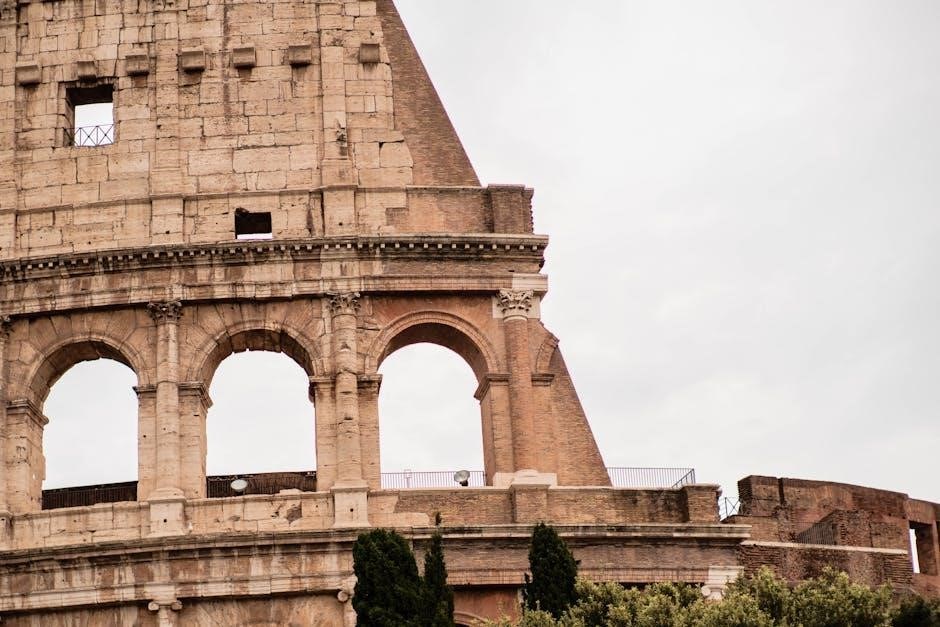
Integrated tickets grant access to all three sites; allocate sufficient time for the Roman Forum and Palatine Hill, enriching your historical exploration.
A guided tour of the Forum can help visualize the ruins.
Integrated Tickets for All Three Sites
Purchasing a combined ticket is the most efficient way to experience the Colosseum, Roman Forum, and Palatine Hill. These integrated tickets provide access to all three archaeological sites, streamlining your visit and often offering cost savings compared to purchasing individual entry passes.
Currently, there are no on-site ticket sales available, emphasizing the necessity of pre-booking online. This integrated access allows for a comprehensive journey through ancient Rome, connecting the gladiatorial arena with the political and social heart of the empire, and the residences of emperors and nobility. Planning your visit around this integrated access maximizes your time and immerses you in the rich history of the area.
Planning Time for the Roman Forum
Allocate sufficient time to fully appreciate the Roman Forum’s sprawling ruins; it’s more than just “piles of stones” as some might initially perceive. A guided tour can significantly enhance understanding, painting a vivid picture of the Forum’s historical significance as the center of ancient Roman life.
However, a self-guided experience is equally rewarding with pre-tour research and downloadable guides. Explore the remnants of temples, basilicas, and government buildings, imagining the bustling activity that once filled this space. Don’t underestimate the Forum’s scale – allow at least two to three hours for a thorough exploration, complementing your Colosseum visit.
Exploring the Palatine Hill
The Palatine Hill, one of Rome’s seven hills, offers breathtaking views and a fascinating glimpse into the city’s origins. Included with your integrated ticket for the Colosseum and Roman Forum, dedicate ample time to explore the legendary founding place of Rome.
Wander through the ruins of imperial palaces, imagining the lives of emperors and aristocrats who once resided here. A PArCo membership grants unlimited access, encouraging multiple visits to fully absorb the historical atmosphere. Combine your exploration with the Forum for a comprehensive understanding of ancient Roman power and society, enriching your self-guided tour.
Enhancing Your Self-Guided Experience
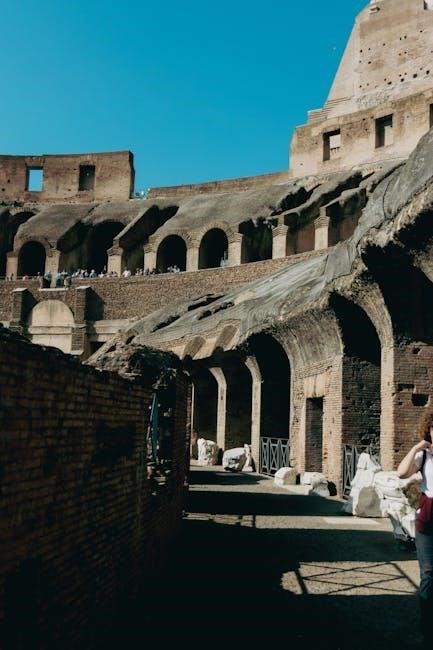
Utilize downloadable guides and pre-tour research to enrich your visit; a quality live guide isn’t always necessary for a fulfilling experience.
Utilizing Downloadable Guides & Resources
Embarking on a self-guided tour doesn’t mean sacrificing insightful information. Numerous downloadable guides and online resources are available to elevate your Colosseum experience. While a live guide offers unique perspectives, readily accessible materials can paint a vivid picture of the amphitheater’s history and significance.
The official MyColosseum app, a completely free tool, provides tickets, explores routes, and delivers captivating stories. Supplement this with pre-tour reading, focusing on the Colosseum’s construction, gladiatorial contests, and its role in Roman society. These resources empower you to navigate the site at your own pace, delving into details that pique your interest.
Simple entrance tickets combined with these free resources are perfect for independent exploration, allowing you to transform piles of ruins into a compelling narrative.
The Value of Pre-Tour Research
Prior research is invaluable for a fulfilling self-guided Colosseum tour. Understanding the historical context transforms the experience from simply seeing ruins to comprehending a civilization. Knowing the Colosseum’s story – its construction, the gladiatorial games, and its eventual decline – enriches your exploration.
Pre-tour study allows you to identify key areas of interest within the complex, maximizing your limited 75-minute visit (with certain tickets). Familiarize yourself with the different levels – the arena floor, the underground hypogeum, and the tiered seating – to navigate efficiently.
A guided tour can help, but independent research empowers you to interpret the site’s significance on your own terms, fostering a deeper connection with Roman history.
Accessibility for Visitors with Disabilities
The Colosseum strives for inclusivity, offering access for visitors with physical disabilities. However, navigating the ancient site presents inherent challenges. It’s crucial to plan ahead and understand available accommodations.
While the first tier is generally accessible, reaching the arena floor or underground levels (hypogeum) may be limited for wheelchair users. The Palatine Hill and Roman Forum also have varying levels of accessibility due to uneven terrain.
Check the official Parco del Colosseum website for detailed information regarding accessible routes, elevators, and assistance services. Pre-booking tickets is essential, and contacting the site directly to discuss specific needs is highly recommended to ensure a smooth and enjoyable visit.
Maximizing Your Time & Avoiding Crowds
Optimal visits are early or late, avoiding peak hours. Be mindful of tour start times and group dynamics; arrive promptly to avoid delays and congestion.
Optimal Times to Visit the Colosseum
Strategically timing your visit is crucial for a more enjoyable self-guided experience. Avoiding peak crowds significantly enhances exploration. While specific data isn’t provided, understanding general tourist patterns is key. Arriving shortly after opening, or later in the afternoon, often presents fewer visitors.
Consider that tours begin at specific times, potentially creating localized congestion. A 9:15 am ticket means a guided group will assemble around 9:45 am, potentially impacting flow. Planning around these scheduled tour starts can offer breathing room. Remember the permitted time inside is 75 minutes with certain tickets, so efficient planning is essential.
Utilizing the MyColosseum app can provide real-time insights into visitor density, helping you adjust your route accordingly. Flexibility is your friend; be prepared to alter your plans based on observed crowd levels for a smoother, more immersive visit.
Understanding Tour Start Times & Group Dynamics
Awareness of scheduled tour times is vital even for self-guided visitors. Groups assembling for guided tours can create temporary bottlenecks, particularly around key areas like the arena floor and underground levels. A ticket time of 9:15 am doesn’t mean immediate access; guides gather groups around 9:45 am, impacting flow.
Observing these dynamics allows you to strategically navigate around larger groups. Consider exploring less crowded areas while tours are in progress, then revisiting popular spots afterward. A guided tour can offer valuable context, but also introduces congestion.

Remember, the Colosseum visit duration is limited to 75 minutes with certain tickets, so maximizing your time requires mindful movement and anticipating potential delays caused by group tours. Utilizing the MyColosseum app may offer insights into tour schedules.
The PArCo Membership Card: Unlimited Access
For frequent visitors or those planning extensive exploration, the PArCo Membership Card offers exceptional value. This card provides unlimited access for 12 months to the Colosseum, Roman Forum, and Palatine Hill – a significant benefit considering individual ticket costs.
It’s a compelling option for those preferring a relaxed, self-guided experience, allowing multiple visits to fully absorb the historical significance of each site. Members can explore at their own pace, revisiting favorite areas or focusing on specific details without time constraints.
Joining the PArCo community unlocks a deeper connection to the Archaeological Park, fostering a more immersive and rewarding self-guided tour experience. Consider this investment for a truly comprehensive exploration.

Understanding the Colosseum’s History
Delve into the Colosseum’s rich past through the Museum on the second level, gaining context for your self-guided tour and appreciating its enduring story.
The Colosseum’s Story: A Brief Overview
The Colosseum, originally known as the Flavian Amphitheatre, stands as an iconic symbol of Imperial Rome. Construction began around 70-72 AD under Emperor Vespasian and was completed in 80 AD under his successor, Titus. This massive structure hosted gladiatorial contests, public spectacles, animal hunts, and even mock sea battles – naumachiae – early in its history.
For centuries, it served as a central hub for entertainment and public life. However, after the decline of the Roman Empire, the Colosseum faced periods of neglect and was even repurposed for housing, workshops, and religious orders. Despite damage from earthquakes and stone-robbing, it remains remarkably preserved.
Today, exploring the Colosseum offers a tangible connection to the past, allowing visitors to imagine the grandeur and drama that once unfolded within its walls. Understanding its history enriches any self-guided tour, providing context to the architectural marvel before you.
The Museum of the Colosseum: Second Level Access
The recently completed Museum of the Colosseum, located on the second level, represents a significant step in reimagining the monument’s guided use and visitor experience. This space offers a deeper dive into the Colosseum’s history, construction, and the lives of those who participated in its spectacles.
Access to the museum is often included with certain ticket types, providing a valuable opportunity to learn more beyond the arena floor and underground levels. Exhibits showcase artifacts, reconstructions, and detailed information about the Colosseum’s architectural features and its role in Roman society.
Integrating a visit to the museum into your self-guided tour enhances understanding and appreciation of this iconic landmark, offering a more comprehensive historical perspective.
Free Access Options to the Colosseum
While generally requiring a ticket, certain categories of visitors are eligible for free access to the Colosseum. This includes individuals with disabilities and, potentially, others qualifying under specific European Union regulations or Italian cultural initiatives.
However, it’s crucial to verify eligibility and pre-book free tickets online, as on-site availability is nonexistent. Documentation proving entitlement to free admission is typically required upon entry. Planning ahead is essential to avoid disappointment and ensure a smooth self-guided experience.
Exploring free access options can significantly reduce costs, making the Colosseum accessible to a wider range of visitors, enhancing their cultural journey.

Important Visitor Information
Be aware: on-site ticket purchases are no longer available. Visitor regulations dictate a permitted time inside, and accessibility options are provided for those with disabilities.
On-Site Ticket Availability (or Lack Thereof)
Planning is crucial as a significant change has occurred regarding ticket purchases for the Colosseum. Currently, as of recent reports, there are no on-site tickets available for purchase at the Colosseum itself. Visitors are strongly advised to secure their entry tickets exclusively online, well in advance of their intended visit date.
This shift aims to manage visitor flow and reduce long queues, particularly during peak seasons. Attempting to purchase tickets upon arrival is likely to result in disappointment and potentially a wasted trip. The official Colosseum website, or authorized resellers, are the recommended channels for acquiring tickets.
Don’t rely on the possibility of last-minute availability; proactive booking is essential for a smooth and enjoyable self-guided experience.
Visitor Regulations & Permitted Time Inside
Understanding the rules is vital for a respectful and compliant visit. The Archaeological Park of the Colosseum enforces specific regulations regarding permitted items and behavior within the monument. Large bags and certain objects may be restricted, so check the official guidelines beforehand.
Crucially, be aware of the time limitations associated with your ticket type. For instance, with certain general entry tickets, the permanence period inside the Colosseum is limited to 75 minutes.
Adhering to these time constraints allows for better crowd management and ensures a positive experience for all visitors. Accessibility provisions are in place for those with disabilities, ensuring inclusivity.



Leave a Reply
You must be logged in to post a comment.